Sedona Arts Center: Our Story
Part One
Before There Was Sedona Arts Center
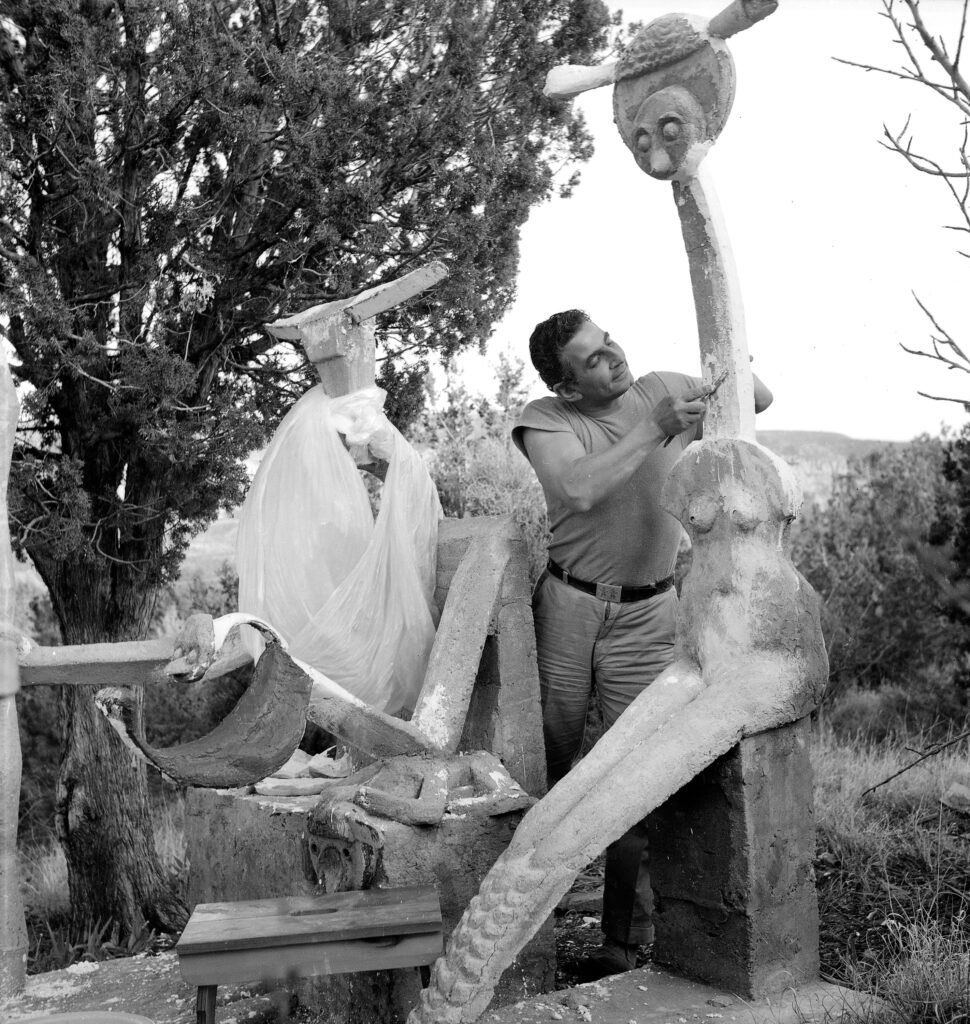
Long before Sedona became an internationally recognized arts destination, artists, educators, and creative thinkers were laying the foundation for what would become Sedona Arts Center, helping shape our community's cultural identity for generations to come.
Today, Sedona is known around the world for its extraordinary red rock landscape and vibrant arts community. Galleries, studios, exhibitions, festivals, and educational programs have become an essential part of our city's cultural identity.
But that identity didn't emerge overnight.
And the story of Sedona Arts Center begins before our organization was formally established in 1958. It begins with a small community, an extraordinary landscape, and a group of people who believed art should be an essential part of everyday life.
An Artistic Community Takes Shape
In the years following World War II, Sedona was still a relatively small and remote community. Its dramatic red rock formations, open spaces, and distinctive light attracted artists and creative thinkers seeking inspiration and a different way of life.
Among them were internationally recognized surrealist artists Max Ernst and Dorothea Tanning, who made Sedona an important home and creative retreat during the 1940s and 1950s.
Their presence connected this small Arizona community to the international art world. Artists, photographers, and intellectuals visited Sedona, including figures associated with the Surrealist movement.
Ernst and Tanning welcomed visitors such as Marcel Duchamp, Henri Cartier-Bresson, and Lee Miller, bringing international artistic conversations into the red rock landscape.
Their connection to Sedona would also become part of the Arts Center's early history. Historical accounts indicate that works by Ernst and Tanning were featured in one of the organization's earliest exhibitions.
Another important influence was Verde Valley School, established in the late 1940s. Its emphasis on education, creativity, and intellectual exploration helped create an environment in which artists and educators could exchange ideas and contribute to the region's developing cultural identity.
Among those educators was a man who would become central to the creation of Sedona Arts Center.
His name was Nassan Gobran.
Nassan Gobran: An Artist With a Vision
Born in Egypt, Nassan Gobran studied and taught art before making his way to the United States.
He had taught art in Cairo and later studied at the School of the Museum of Fine Arts in Boston. His journey eventually brought him to Arizona, where he accepted a teaching position at Verde Valley School.
Gobran recognized something extraordinary about Sedona.
The landscape provided inspiration, but the community also offered an opportunity to build something lasting.
By the mid-1950s, Gobran and other artists and educators were developing opportunities for organized arts education in Sedona. These early efforts led to the Sedona Summer Art Center, an accredited six-week program through Arizona State University that brought students and professional artists together for intensive creative study.
What began as a summer educational program would help establish the foundation for a permanent arts organization. And thanks to a remarkable contemporary account published in Arizona Highways, we have a glimpse into what those early years were actually like.
The Summer Art Center
In May 1959, Arizona Highways published an article about the Sedona Summer Art Center, documenting a growing educational program that had already become an important part of the community.
The article described 1959 as the school's fourth summer, placing its beginnings around 1956.
The 1959 article described approximately 45 students participating in a five-week program of intensive artistic study.
Some days involved as many as 12 hours of creative activity.
Students explored painting, drawing, ceramics, sculpture, and other disciplines under the guidance of accomplished artists and instructors.
Gobran taught life drawing, sharing his experience as both an artist and educator.
Among the other instructors were Charles and Otelie Loloma, whose contributions to Native American art and design would become widely recognized. The Lolomas taught ceramics, while Charles also instructed students in silversmithing.
The program offered more than technical instruction.
Friday critiques were open to interested residents, creating opportunities for the broader community to participate in discussions about art. Evening lectures brought artists, students, and local residents together to exchange ideas and explore creative expression.
The school's activities also connected Sedona to the larger art world.
During the 1958 summer session, artist Jimmy Ernst, the son of Max Ernst, delivered a lecture while spending time at his father's Sedona home.
Student exhibitions were held at the Sedona schoolhouse, where artwork was displayed and offered for sale.
These early exhibitions helped establish a relationship between artists and the community that would become a defining feature of Sedona Arts Center.
The Summer Art Center was not simply a place where people came to take classes. It was becoming a gathering place for creative expression, education, and cultural exchange.
Building a Creative Community
What makes these early years particularly remarkable is that Sedona's artistic community was developing alongside the community itself.
Sedona had not yet incorporated as a city. Much of the infrastructure, cultural programming, and civic identity familiar today was still taking shape.
There was no Sedona Plein Air Festival, no Gallery Shop representing more than 100 local and regional artists, and no established Arts Center campus.
But the essential ingredients were already present.
Artists were sharing their knowledge. Students were coming to Sedona to learn. Residents were attending lectures, exhibitions, and critiques. Creative activity was bringing people together.
The early vision wasn’t limited to teaching painting or sculpture. It reflected a broader understanding that art could enrich a community and create opportunities for people to connect.
That philosophy would eventually extend beyond the visual arts to include theater, music, dance, exhibitions, and community events.
The people involved in these early efforts were helping establish more than an art school.
They were helping define Sedona as a place where creativity mattered.
From an Idea to an Institution
By the late 1950s, the artistic energy developing in Sedona had grown into something that called for a more permanent organizational structure.
In 1958, a group of community members formally incorporated an organization called Canyon Kiva.
Among its founders were Nassan Gobran, E. V. Staude, George Babbitt Jr., Lois Duncan, John Hampton, Willis Leenhouts, Douglas Rigby, Marguerite Staude, Cecil Lockhart-Smith, William W. Stevenson, Helen Varner, Hamilton Warren, and Eugenia Wright.
Their individual backgrounds and contributions would help shape Sedona Arts Center’s direction in the years ahead.
Cecil Lockhart-Smith, one of those founding members, was also associated with the May 1959 Arizona Highways article documenting the Summer Art Center.
The connection reflects how closely intertwined the early organization was with the people actively participating in Sedona's artistic and cultural life.
Canyon Kiva would eventually become Sedona Arts Center, growing from those early educational efforts into an institution that would help shape our community’s cultural identity.
Its story would include extraordinary achievements, ambitious dreams, difficult transitions, and periods of uncertainty.
But the foundation had been established.
More than 68 years later, Sedona Arts Center continues to build on that original belief in the importance of art, education, and community.
And perhaps the most remarkable part of this history is that Sedona didn’t become an arts destination by accident.
People made it happen.
They taught classes, organized exhibitions, invited artists, raised money, volunteered their time, and imagined what their community could become.
Before Sedona was known around the world for its arts, people were already doing the work of making it an arts community.
Next in Our Story: The Canyon Kiva — the founders, their vision, and the creation of an organization that would help shape Sedona's cultural future.
Sources
- Arizona Highways, “Sedona Summer Art Center,” May 1959
- Sedona Red Rock News, “Sedona Arts Center Celebrates 60 Years”
- Dorothea Tanning, Official Artist Chronology
- Dorothea Tanning, Life & Work Timeline, including historical Sedona photographs
- Sedona.biz, “Julie Richard to Share History of Sedona Arts Center,” 2024